Skip to content

Trust vs. Probate

Probate sale vs. trust sale: what's the difference?

In plain terms: property held in a living trust generally stays out of court probate, while property owned only in the deceased person's name usually goes through it. That single difference shapes who has authority to sell, how the price is approved, and how long the process takes.

This post explains how a trustee sells trust property, how probate sales differ, and the questions to ask your attorney before putting either process in motion. It is general education, not legal or tax advice.

By Daniel Racedo Updated October 29, 2026
Get a Free Valuation for Either Scenario
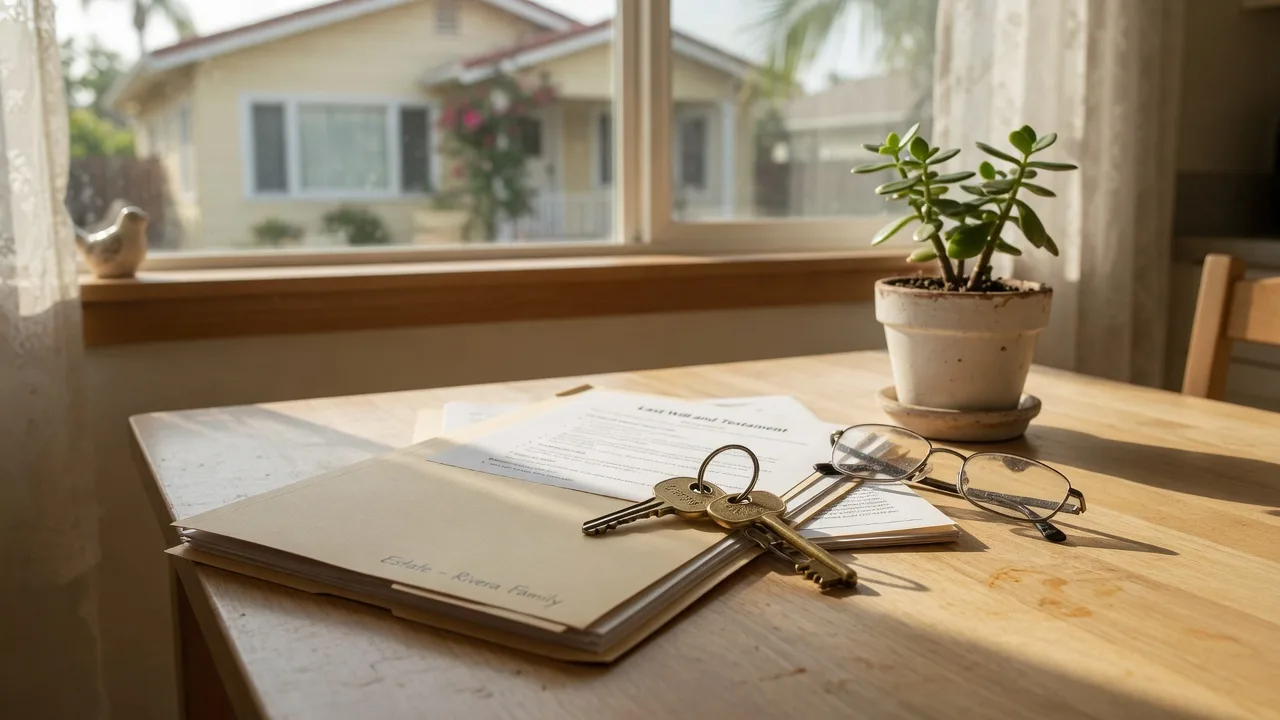
Illustrative photo of estate papers and a house key on a wooden table in morning light
Illustrative image. Estate documents and keys, the tools of a property transfer.

The Basics

What a living trust is, and why it avoids probate.

A living trust is a legal arrangement created during someone's lifetime. The person who creates it, called the grantor or settlor, transfers ownership of assets such as the family home into the trust. The trust names a trustee to manage those assets and beneficiaries who will receive them.

Because the home is owned by the trust rather than by the person individually, there is no estate for the court to administer when the grantor passes away. The trustee simply continues to act under the trust document, which typically names a successor trustee to take over. That is why trust property generally passes to beneficiaries outside court probate.

A revocable living trust can be changed or revoked during the grantor's lifetime, and most California families who create one do so specifically to keep their home and other assets out of probate. Even so, a trust does not remove every legal and tax question: transfers still trigger trustee duties, beneficiary rights, and tax considerations.
The Trustee's Path

How a trustee sells trust property.

The trustee's authority comes from the trust document, not from a court appointment. With that authority, and typically without a formal confirmation process, the sale can move like a traditional transaction:

  1. 01

    The trustee reviews the trust document to confirm the authority to sell real property and any instructions it places on the sale.

  2. 02

    If beneficiaries must be notified or asked to consent, the trustee handles those steps according to the trust and the law.

  3. 03

    The property is priced at fair market value. A trustee owes fiduciary duties to the beneficiaries, so the price must hold up, even if there is no court to review it.

  4. 04

    The sale proceeds like a traditional real estate transaction, with marketing, offers, escrow, and closing handled by the team around the trustee.

  5. 05

    Proceeds are distributed under the trust's terms, and tax considerations for the estate and the beneficiaries are handled with professional advice.

Because there is no court to protect beneficiaries, the trustee's fiduciary duties carry the weight: fair pricing, careful documentation, and honest communication. An experienced agent provides the market data that lets a trustee demonstrate fair value.

The Probate Path

How probate sales differ.

A probate sale runs under the court's supervision from start to finish. The executor or administrator is appointed by the court, acts under Letters of authority, and answers to the court in an accounting before the estate can close.

The signature difference is approval of the sale. In a probate estate without independent administration authority, the sale is confirmed at a hearing, where the judge reviews the price and qualified buyers can overbid. In a trust sale there is generally no such hearing: the trustee's judgment, guided by fiduciary duty, sets the standard.

Probate also runs on the court's calendar, which almost always adds time. Trust administration can sometimes move at the pace of a traditional sale, while a probate sale commonly takes longer. Both are well-traveled roads; they just have different scenery.

Side by Side

Trust sale vs. probate sale at a glance.

Trust sale

  • Authority comes from the trust document, not the court.
  • Usually no court confirmation hearing for the sale.
  • Trustee owes fiduciary duties to the beneficiaries.
  • Can sometimes move at the pace of a traditional sale.
  • Key documents: trust, trustee powers, beneficiary consents.

Probate sale

  • Authority comes from the court's appointment and Letters.
  • Sale is often confirmed at a hearing with possible overbids.
  • Court supervises the process, accounting, and distribution.
  • Runs on court calendars; commonly takes longer.
  • Key documents: Letters, inventory, appraisals, court orders.

Common Scenarios

Which situation does your family face?

Home owned only by the deceased person

If the home is titled only in the deceased person's name and there is no living trust, it is probate property and usually must clear probate before it can be sold or transferred.

Home held in a revocable living trust

If the home is titled in the name of the trust, it typically passes to beneficiaries through trust administration, outside court probate. The trustee handles the sale under the trust document.

Joint ownership or beneficiary deeds

Homes held in joint tenancy with right of survivorship, community property with right of survivorship, or passed by a transfer-on-death deed generally transfer outside probate to the surviving owner or named beneficiary.

Multiple heirs and unclear ownership

When several people inherit together as tenants in common or the ownership picture is complicated, the path can blend probate and trust rules. The estate attorney determines the exact procedure.

Before You Sell

Questions to ask your attorney before selling.

The right questions make the difference between a smooth sale and a stalled one. Bring this list to your first conversation with the estate attorney.

Ask Daniel for a Referral or a Second Opinion
  • 01

    Who has the legal authority to sign the listing agreement and the deed?

  • 02

    Is court approval required for this sale, or does the personal representative or trustee hold independent authority?

  • 03

    What notice or consent must beneficiaries receive before the property can be sold?

  • 04

    What are the property tax reassessment considerations for this transfer?

  • 05

    How should the proceeds be handled for income tax and trustee accounting purposes?

  • 06

    Are there any deadlines, such as creditor claim periods or court filing dates, that the sale must work around?

Daniel Can Help in Either Scenario

Daniel works with the estate's attorney, in probate or trust.

Whether the home is moving through trust administration or a court-supervised probate, Daniel coordinates the real estate side with the estate's attorney so the legal and property steps line up. With Nearly 40 years of real estate experience across Southern California, he knows what each process requires and how to price, prepare, and market the home to get the best realistic result.

Not sure which path your family's home is on?

Daniel can look at the ownership picture, value the property, and explain how the sale would flow in either scenario, then coordinate with your estate attorney from there.

Prefer to write it out? Send Daniel a message.

Important: not legal or tax advice

Daniel Racedo is a real estate professional, not an attorney, CPA, or tax advisor. The information on this page is general education about real estate services and does not constitute legal, tax, or financial advice. Probate, trust, and estate matters carry legal requirements that vary by situation. Families, executors, trustees, and administrators should consult their own attorney, CPA, or tax advisor before making decisions about an estate. No guarantee of sale price, timeline, or outcome is made or implied.

However the home is owned, it deserves clear guidance.

Start with a free, no-obligation estate property valuation and a conversation about which process applies and what comes next. Let's talk real estate.